A bathroom should feel good at 6 a.m. on a workday and still work hard when a house is full of family. That practical standard is shaping bathroom design trends 2026 more than any single color or fixture. Homeowners are moving away from cold, overly staged bathrooms and choosing spaces with warmth, storage, better lighting, and finishes built for daily use.
For homeowners in Slidell and across the Gulf Coast, the best design choices also need to stand up to humidity, moisture, busy households, and changing needs over time. A beautiful bathroom is the goal, but a well-planned bathroom delivers more comfort, easier cleaning, and stronger long-term value.
Bathroom Design Trends 2026 Put Function First
The biggest shift in 2026 is toward bathrooms that look refined without acting precious. Homeowners still want a space that feels like a retreat, but they are asking better questions before selecting materials: Will this grout be difficult to maintain? Is there enough counter space? Where do towels, hair tools, and everyday products go? Can the shower be used comfortably for the next 10 or 15 years?
That mindset leads to designs with fewer unnecessary details and more thoughtful decisions. A large vanity with real drawer storage often makes a bigger difference than a decorative accent wall. A properly waterproofed shower and quality ventilation matter more than a trendy finish that will look dated in a few years.
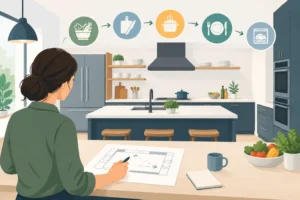
The right plan depends on the home and the people using it. A compact hall bathroom may need a tub, durable tile, and easy-access storage for children. A primary bathroom may benefit more from a larger shower, a double vanity, and a private water closet. Good remodeling starts by matching the layout to daily life instead of forcing every bathroom into the same showroom look.
Warm, Natural Materials Replace Stark All-White Spaces
White bathrooms are not disappearing, but the sharp, all-white look is giving way to warmer combinations. Soft beige, sand, clay, taupe, mushroom, muted green, and warm gray are becoming common choices for walls, tile, cabinetry, and countertops. These colors add depth without making a bathroom feel dark.
Natural-looking materials are part of the same move. Homeowners are choosing wood-tone vanities, stone-inspired porcelain tile, textured ceramic, and brushed metal fixtures that bring a more grounded feel to the room. Oak and walnut-style cabinetry can soften the hard surfaces found in most bathrooms, while porcelain offers the look of natural stone with less maintenance.
There is a practical reason to avoid chasing every finish trend. Bathrooms are expensive to renovate, and major surfaces should have staying power. A warm neutral tile paired with paint, hardware, mirrors, and lighting that can be updated later is usually a safer investment than a bold tile choice installed across every wall.
Texture Adds Interest Without Adding Clutter
Texture is taking the place of excessive decoration. Fluted vanity fronts, handmade-look wall tile, vertical stacked tile, subtle stone veining, and plaster-inspired paint finishes can create visual interest while keeping the room calm.
The key is restraint. If the shower tile has movement and texture, a quieter vanity top and simpler floor may keep the room balanced. In a smaller bathroom, using too many competing patterns can make the space feel crowded. A skilled remodeling team can help homeowners select finishes that work together under the room’s actual lighting, not just under showroom lights.
Larger, Better-Designed Showers Continue to Lead
Walk-in showers remain one of the strongest bathroom remodeling priorities for 2026. Many homeowners are replacing underused garden tubs with larger showers that offer more open floor space, easier access, and a cleaner appearance.
Frameless glass remains popular, but the design is becoming more considered. Some bathrooms use a fixed glass panel instead of a full enclosure to reduce visual bulk and simplify cleaning. Others incorporate partial walls or tiled privacy walls, which can provide more privacy while creating a place for plumbing fixtures or recessed niches.
Curbless showers are also gaining attention because they create a smooth transition from the bathroom floor into the shower. They can make a room feel larger and support aging-in-place planning. However, they require careful floor slope, drainage, waterproofing, and framing work. This is not an area to cut corners. A poor installation can lead to water escaping the shower or causing damage beneath the finished surfaces.
For Gulf Coast homes, ventilation and waterproofing deserve just as much attention as tile selection. Proper backer materials, sealed penetrations, a correctly installed shower pan, and an exhaust fan sized for the room all help protect the investment from moisture problems.
Smarter Storage Makes Bathrooms Feel More Luxurious
A well-organized bathroom feels larger and more relaxing because the counters stay clear. In 2026, vanities with deep drawers are often preferred over cabinets with one open cavity. Drawers make it easier to access grooming products, makeup, medications, and hair tools without digging through the back of a cabinet.
Tall linen cabinets, recessed medicine cabinets, built-in shower niches, and dedicated outlets inside vanity drawers are all practical upgrades worth discussing during the planning stage. Even a small bathroom can gain useful storage when every inch is measured with purpose.
Custom or semi-custom cabinetry can be especially valuable when standard vanity sizes leave awkward gaps or fail to meet a family’s needs. A vanity built around the room can provide more usable storage, better proportions, and a more finished appearance. It may cost more upfront than an off-the-shelf unit, but the difference is often noticeable every day.
Layered Lighting Is No Longer Optional
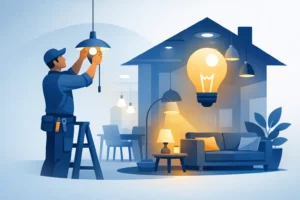
One overhead light is rarely enough for a bathroom. Better lighting is a major part of current bathroom design because it improves safety, comfort, and everyday routines. The goal is to combine ambient lighting for the room, task lighting at the vanity, and accent lighting where it adds function or atmosphere.
Sconces placed beside a mirror generally provide more even facial lighting than a single fixture mounted above it. Recessed ceiling lights can brighten the room and shower area, while dimmers allow the bathroom to feel calmer in the evening. A lighted mirror may be a good fit in some spaces, especially where wall space is limited.
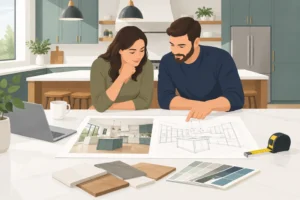
Lighting should be planned early, not added after the layout is set. Moving electrical, choosing fixture locations, and accounting for mirror size are easier before walls are closed and tile is installed. This is one reason a clear renovation plan saves frustration later in the project.
More Personal Color, Less Matchy-Matchy Design
Bathrooms in 2026 are becoming more personal. Instead of matching every finish perfectly, homeowners are mixing complementary materials and metals with more confidence. A brushed nickel faucet may work with warm brass sconces when the overall palette is intentional. A painted vanity can add personality to an otherwise neutral room.
Muted blue-green, deep navy, charcoal, terracotta, and dusty olive are all showing up in cabinetry and tile accents. These colors can give a bathroom character without overwhelming it. Still, the size of the room matters. Darker colors can feel rich and tailored in a well-lit primary bath, but they may make a small, windowless powder room feel tighter unless balanced with good lighting and lighter surrounding surfaces.
Comfort Features That Earn Their Keep
The most lasting upgrades are often the ones homeowners do not notice until they live without them. Heated floors can make tile more comfortable on cool mornings. A handheld showerhead makes cleaning easier and improves flexibility for children, pets, and aging family members. Comfort-height toilets, grab-bar blocking behind walls, and wider shower entries are practical choices that can support long-term use without making a bathroom look institutional.
These features should be prioritized based on budget and household needs. If a remodel requires choosing between a high-end decorative faucet and a properly designed shower system, the shower system is usually the better place to invest. Quality workmanship behind the walls protects the finishes everyone sees.
A bathroom renovation is a chance to solve the small frustrations that have been part of the house for years. Whether that means replacing a cramped tub, adding storage, updating worn finishes, or building a primary bath that feels more comfortable, the best 2026 designs are the ones that fit the homeowner first. Smith & Port Construction helps homeowners plan those details carefully, from the initial estimate through the finish work, so the completed room looks right and works right for years to come.